L-threonine is an essential amino acid, which means the body cannot make it and must get it from food. It helps build proteins, including mucin, a protein in the gut’s protective mucus layer.
L-threonine is an essential amino acid you get from food
Amino acids are the units that form proteins. Digestion breaks food protein into amino acids and smaller peptides the body can use. Threonine is essential because humans cannot make it, so it must come from dietary protein. A review of the L-aspartate amino acid family identifies threonine as essential in humans (Recent advances in the metabolic engineering and physiological opportunities for microbial synthesis of L-aspartic acid family amino acids: A review, International Journal of Biological Macromolecules, 2023).
L-threonine is the form found in human proteins and commonly meant by “threonine” in nutrition. It circulates in the body and can become part of proteins. Getting enough is part of eating varied dietary protein; one amino acid alone cannot assess the whole diet. For measured results, see Threonine: What Your Result Means.
What makes threonine different from other amino acids
All amino acids help build proteins, but threonine is notable for its role in mucin, a major protein in the gut’s protective mucus layer. The gut uses threonine for ongoing maintenance, as well as for proteins elsewhere in the body. Holohabits’ threonine guide explains why gut demand may matter when interpreting a result.
Threonine’s polar side chain interacts with water and can take part in chemical interactions that differ from those of non-polar amino acids. A review describes its alpha-amino, carboxylate and polar side-chain groups as potential metal-binding sites in copper complexes in blood plasma. This does not measure threonine’s overall nutritional importance (Bis(amino acidato)copper(II) compounds in blood plasma: a review of computed structural properties and amino acid affinities for Cu(2+) informing further pharmacological research, Arhiv za higijenu rada i toksikologiju, 2024).
The body can also convert threonine into compounds including glycine and serine. A blood result is one measurement at one point in time; it does not show how much threonine the gut used, how much entered different proteins, or why the value is where it is.

Illustration: A measured amino acid is one detail in a broader nutrition profile.
How threonine fits into dietary protein
Dietary protein comes from food. During digestion, proteins break into parts the body can absorb and use to build new proteins, replace older ones or support other processes. Threonine is needed to build proteins, but a meal’s total protein content does not explain every detail of how the body uses it.
Protein foods vary in amino acid composition. Eating a range of sources can provide a wider mix of essential amino acids. Eggs, dairy, fish, poultry and meat contain threonine; plant foods also provide protein and threonine, in amounts and combinations that vary by food. What matters is usually the overall pattern of food intake, not whether one food affects a single marker.
Threonine also contributes to proteins with specific jobs. Mucin helps form the gut’s mucus layer, which helps explain why the gut may use some dietary threonine before other tissues do. But gut demand does not explain every low blood result, and a single value cannot show what is happening in the gut.
Threonine is one of several essential amino acids. For a comparison with branched-chain amino acids, see Branched-chain amino acids (BCAA). BCAA refers to leucine, isoleucine and valine, not threonine. What Does a BCAA Assay Measure? gives more context. Tryptophan is another essential amino acid with different roles and pathways; see Tryptophan.
Foods that contain threonine
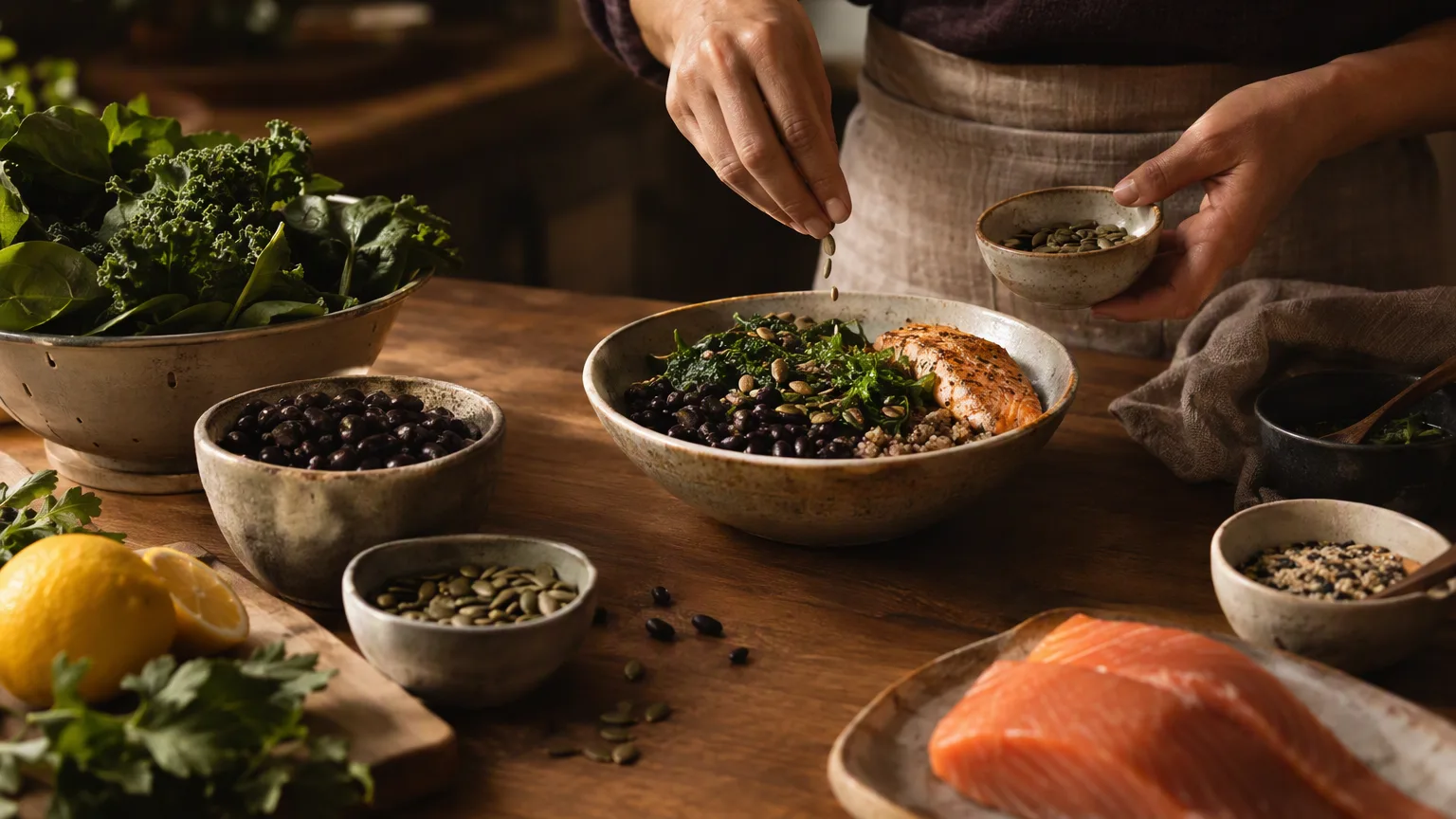
Threonine is found in protein-containing foods, including eggs, dairy products, fish, poultry, meat, beans, lentils, nuts, seeds and some grains. The amount depends on the food and serving size, so a food list alone cannot show daily intake.
A varied diet with regular protein sources is more likely to provide a range of amino acids than meals with little protein or a narrow selection. Plant-based sources include legumes, nuts, seeds and grains. Different protein sources across meals add variety; each meal need not follow a special formula.
Foods also differ in other nutrients, fibre, preparation and suitability for individual preferences. Choices should fit a person’s needs and circumstances. A measured threonine result cannot identify a food as its cause or show whether supplementation is needed.
For a quick reference to the marker and its interpretation in the Holohabits framework, see the threonine learn page. A practitioner may consider a result alongside other amino acids and relevant context. The page is not a substitute for an overall diet assessment or a discussion of health concerns with a qualified healthcare professional.
How Holohabits measures threonine in a nutrition profile
Holohabits Nutrition OS is an at-home finger-prick test reviewed with a practitioner. Its panel includes 40 markers: 29 whole-blood biomarkers, 7 calculated ratios and 4 intracellular values. The intracellular values require the optional Longevity Panel. Threonine appears among the amino acid markers in the nutrition profile.
The kit includes prepaid sample return, four PDF reports on biomarkers and the Western Lifestyle Index, AI analysis, meal and supplement plans, food recommendations, a 30-minute Zoom consultation and access to the app’s AI reporting tools. Practitioners review results in the HOLOBIONT Practitioner workspace and deliver reports to clients. The app includes HOLOBIONT, an AI nutrition coach.
Practitioners can interpret amino acid results alongside other markers, food preferences and everyday habits. The AI supports questions about food choices and results, but is not medical advice. Holohabits does not provide medical services.
Review the Holohabits Nutrition OS test kit and its information before ordering. The test, practitioner conversation and app support everyday food planning but do not replace care from a qualified healthcare professional.
What a measured threonine result can and cannot tell you
A measured result describes the threonine value in a sample, interpreted against the panel’s reference information. It is one detail in a broader nutrition profile, but cannot explain why the value falls where it does, account fully for dietary intake or show what is happening in a particular tissue.
The gut’s use of threonine is one reason a blood result needs context. Mucin contains threonine, and the gut uses amino acids to maintain its lining. The result alone cannot distinguish dietary intake from gut demand or other influences. The Holohabits threonine guide describes reading the marker alongside glutamine and proline, which also relate to gut tissue use. Together, these markers offer a broader starting point than one number alone.
A result does not tell someone what to eat or establish a medical cause. Food recommendations should fit the person’s usual diet, preferences and other results. A practitioner can discuss the result in nutrition planning; health concerns or persistent symptoms should go to a qualified healthcare professional.
The measurement can prompt questions about protein variety, related markers and personal context. These questions are not conclusions from threonine alone; practitioner-led interpretation keeps discussion proportionate to what the result shows.
L-threonine and L-theanine are different compounds
L-threonine is an essential amino acid used to build proteins. L-theanine is a separate amino-acid-like compound associated with tea, not another name for threonine.
Both names include “L,” which indicates a molecular form, but the rest identifies different compounds. A product containing L-theanine is not a source of L-threonine. Check the full ingredient name: a threonine measurement concerns threonine, and information about one should not be applied to the other.
Frequently asked questions
What is L-threonine used for?
L-threonine is an essential amino acid used to build proteins, including mucin in the gut’s protective mucus layer. A measured result is a nutrition marker, not a medical assessment.
Is threonine the same as L-theanine?
No. L-threonine builds proteins; L-theanine is a different compound associated with tea. The names are similar, but they are not interchangeable.
What foods contain threonine?
Threonine is found in protein-containing foods, including eggs, dairy, fish, poultry, meat, beans, lentils, nuts, seeds and grains. Amounts vary by food and serving size.
Does a threonine result tell me what to eat?
No. A result alone cannot identify the right food or explain the value. A practitioner can consider it alongside other results, dietary preferences and everyday context.
Sources
- Recent advances in the metabolic engineering and physiological opportunities for microbial synthesis of L-aspartic acid family amino acids: A review, International Journal of Biological Macromolecules, 2023.
- Bis(amino acidato)copper(II) compounds in blood plasma: a review of computed structural properties and amino acid affinities for Cu(2+) informing further pharmacological research, Arhiv za higijenu rada i toksikologiju, 2024.