L-tryptophan and L-tyrosine are different amino acids with different roles. Tryptophan is a starting material for serotonin and melatonin, while tyrosine contributes to dopamine, noradrenaline, adrenaline and thyroid hormone. Their measured ratio compares their circulating levels, but cannot predict a person’s mood, sleep or health on its own.
Tryptophan and tyrosine have different roles, and their ratio describes their measured balance
L-tryptophan and L-tyrosine are amino acids found in the body and in protein-containing foods. They have distinct roles: tryptophan must come from the diet, while the body can make tyrosine from phenylalanine.
A comparison may concern their functions, supplements or measured ratio. These are different questions. Knowing their roles does not show which amino acid a person needs more of, and the ratio does not directly measure serotonin or dopamine.
Tryptophan contributes to serotonin and melatonin pathways and the kynurenine pathway. Tyrosine is a starting material for catecholamines, including dopamine, noradrenaline and adrenaline, and contributes to thyroid hormone structure. Circulating levels are only one part of how these pathways work.
The ratio compares two amino acid results. It adds context to individual values but does not show how much serotonin or dopamine the body produces or how those systems function. See Tryptophan: What Your Result Means, Tyrosine: What Your Result Means and Tryptophan-to-tyrosine ratio.

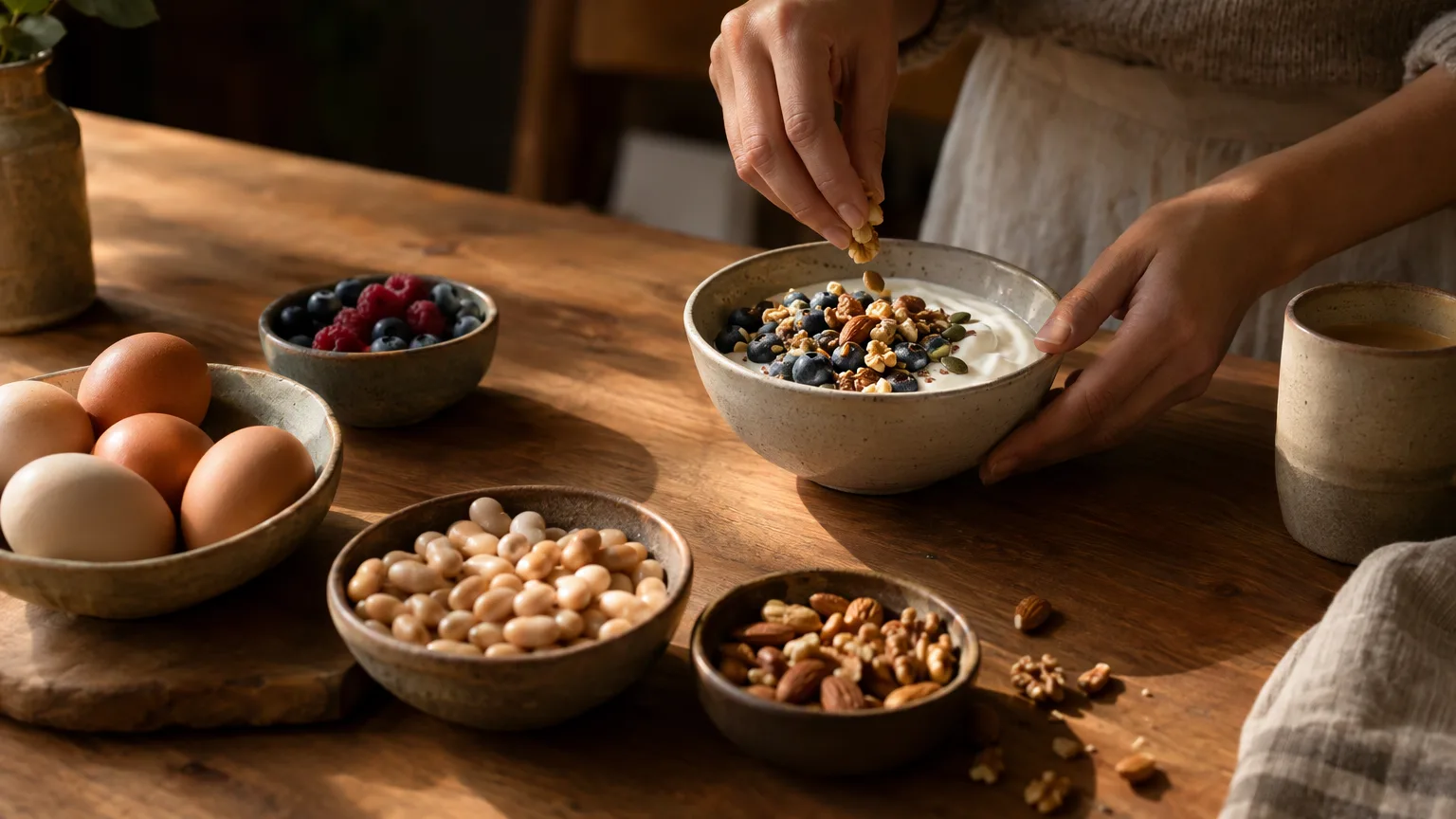
Illustration: A measured amino acid result is one part of a broader nutrition picture.
How tryptophan and tyrosine differ in the body
Tryptophan is an essential amino acid that must come from food. It has several metabolic destinations: some is used to make serotonin, which can be converted to melatonin, while much is metabolised through the kynurenine pathway. Gut microbiota also produce tryptophan-derived compounds involved in gut and immune processes (“Tryptophan metabolism and the intestinal microbiota: Implications for inflammatory bowel disease”, Microbiological Research, 2025).
A blood tryptophan result does not show which pathway uses the amino acid. It is not a direct serotonin reading or a measure of how much tryptophan reaches the brain, where transport involves competition with other amino acids. See the tryptophan learn page for the marker and its reference range in the Holohabits panel.
Tyrosine is conditionally essential: the body can make it from phenylalanine, though dietary intake and circulating levels can vary. It contributes to dopamine, noradrenaline and adrenaline production and provides part of the structure of thyroid hormones, which also require iodine. A tyrosine concentration alone does not measure these systems’ output.
Both amino acids occur in protein foods, so meals do not normally provide one in isolation. Measured levels can reflect factors beyond recent food intake.
These roles do not boil down to “calm versus alert.” Serotonin has neurological and other physiological roles, and tryptophan has multiple metabolic fates. Host-microbe serotonin metabolism relates to neurological, cardiovascular, gastrointestinal and endocrine systems (“Host-microbe serotonin metabolism”, Trends in Endocrinology and Metabolism, 2025). An amino acid result therefore cannot predict a single feeling or outcome.
What the tryptophan-to-tyrosine ratio expresses
The ratio compares measured tryptophan with tyrosine, showing whether one is higher relative to the other. It is not a third substance in the blood and does not directly measure a neurotransmitter.
Ratios can add context when people have similar individual values but different relationships between them. However, the comparison only reflects what was measured. It does not show whether either amino acid reaches a particular tissue, how quickly it is used or how active a metabolic pathway is.
A ratio can change because tryptophan changes, tyrosine changes, or both. Consider the component results too: a higher ratio does not automatically mean “more serotonin,” nor does a lower one mean “more dopamine.”
Holohabits includes a tryptophan-to-tyrosine ratio among its calculated ratios. This is one of 7 calculated ratios within the 40-marker panel, not a separate measurement of serotonin or dopamine. Interpret it alongside measured tryptophan and tyrosine values and the wider nutrition profile. The BCAA-to-tyrosine ratio is a separate comparison, not a substitute.
Why the ratio does not predict one mood or health outcome
It can be tempting to treat tryptophan as a “serotonin marker” and tyrosine as a “dopamine marker,” then infer mood or motivation from their ratio. But a circulating amino acid level does not show how much is converted into a particular chemical, where conversion occurs or what the resulting activity means for a person.
Tryptophan can enter serotonin-related metabolism, but it also follows other routes, including kynurenine and pathways that produce indole compounds. A tryptophan result alone does not show the balance among these routes. Reviews describe distinct pathways and interactions with the gut microbiota, with implications for intestinal and immune processes (“Tryptophan metabolism as a target in gut microbiota, ageing and kidney disease”, International Journal of Biological Sciences, 2025).
Tyrosine is a catecholamine precursor, but its measured level does not show how much dopamine or noradrenaline is made or used, or measure thyroid function. Pathway demand and relevant cofactors also matter.
Mood and health outcomes involve many biological, social and personal factors. A systematic umbrella review of depression and serotonin concentration or activity highlights the need for careful evaluation, not simple inference from one precursor (“The serotonin theory of depression: a systematic umbrella review of the evidence”, Molecular Psychiatry, 2023). It does not show that the ratio predicts depression or any individual outcome.
The ratio is a nutrition measurement, not a mood test or standalone health assessment. Discuss symptoms or health concerns with a qualified healthcare professional. Holohabits can help explain nutrition results and their limitations, but it is a wellness and nutrition tool, not a medical service.
How Holohabits measures tryptophan and tyrosine
Holohabits Nutrition OS is an at-home finger-prick test with practitioner-led interpretation and an app. Its panel lists 40 markers: 29 whole-blood biomarkers, 7 calculated ratios and 4 intracellular values, which require the optional Longevity Panel. Tryptophan and tyrosine are amino acid markers; the tryptophan-to-tyrosine ratio is one of the calculated ratios.
The kit includes prepaid sample return, four PDF reports, food recommendations, a 30-minute Zoom consultation, AI-based reporting tools and the app with results and AI nutrition coach HOLOBIONT. Practitioners review results in the HOLOBIONT Practitioner workspace and deliver reports. The app uses results as context for food and result questions.
The panel does not directly measure serotonin or dopamine. Practitioners consider personal context when interpreting results; the app does not replace professional healthcare advice.
Order the Holohabits Nutrition OS test kit to view amino acid results within a broader nutrition profile. Holohabits Nutrition OS is not a medical device or medical service, and its reports and app are not for identifying or managing a medical condition.
How to interpret the measurement alongside other results
Review the separate tryptophan and tyrosine values before considering their ratio. The ratio describes their relative balance, but different combinations can produce the same ratio, so the component results matter.
A tryptophan value does not show how it is divided among serotonin, kynurenine and other pathways. A tyrosine value does not reveal catecholamine production or thyroid function. Neither the ratio nor its components identify a cause, predict a particular mood or establish a needed dietary change.
Other markers may add context, but they do not make an amino acid result diagnostic. A practitioner can consider the broader panel, food patterns and relevant lifestyle factors rather than treating one number as a target with a fixed meaning.
Discuss concerns, symptoms or medications relevant to nutrition or mood with a qualified healthcare professional. Do not base supplement decisions on the ratio alone.
What happens after you take the at-home test
Collect a finger-prick sample at home and return it in the prepaid packaging. A practitioner reviews the results and provides biomarker and Western Lifestyle Index reports, AI analysis, a meal plan and a supplement plan. The included 30-minute consultation lets you ask questions and discuss the results.
The Holohabits app provides access to results and HOLOBIONT, an AI nutrition coach that answers questions about meals and markers. Its guidance is informational; discuss it with a practitioner. Reports and food recommendations are not medical advice.
Ask the practitioner about tryptophan and tyrosine values in the context of the full panel rather than drawing conclusions from the ratio alone. Consult a qualified healthcare professional about health concerns.
Frequently asked questions
Which is better, L-tryptophan or L-tyrosine?
Neither is universally better. They have different roles, and measured results do not establish that one should be increased or supplemented. Discuss health concerns or supplements with a qualified healthcare professional.
Can you take L-tryptophan and L-tyrosine together?
Whether both supplements are safe or needed depends on health, diet and medications. Discuss supplement use with a qualified healthcare professional, especially if you have a health condition or take medication.
Does L-tryptophan lower cortisol?
A tryptophan result does not show cortisol levels or establish that tryptophan lowers cortisol. Its measured amount cannot predict a specific hormone effect.
Does L-tyrosine deplete serotonin?
A tyrosine result does not establish serotonin depletion. Tyrosine and tryptophan are involved in different pathways, and their ratio does not directly measure serotonin production or activity.
Sources
- Tryptophan metabolism and the intestinal microbiota: Implications for inflammatory bowel disease, Microbiological Research, 2025.
- Host-microbe serotonin metabolism, Trends in Endocrinology and Metabolism, 2025.
- Tryptophan metabolism as a target in gut microbiota, ageing and kidney disease, International Journal of Biological Sciences, 2025.
- The serotonin theory of depression: a systematic umbrella review of the evidence, Molecular Psychiatry, 2023.